
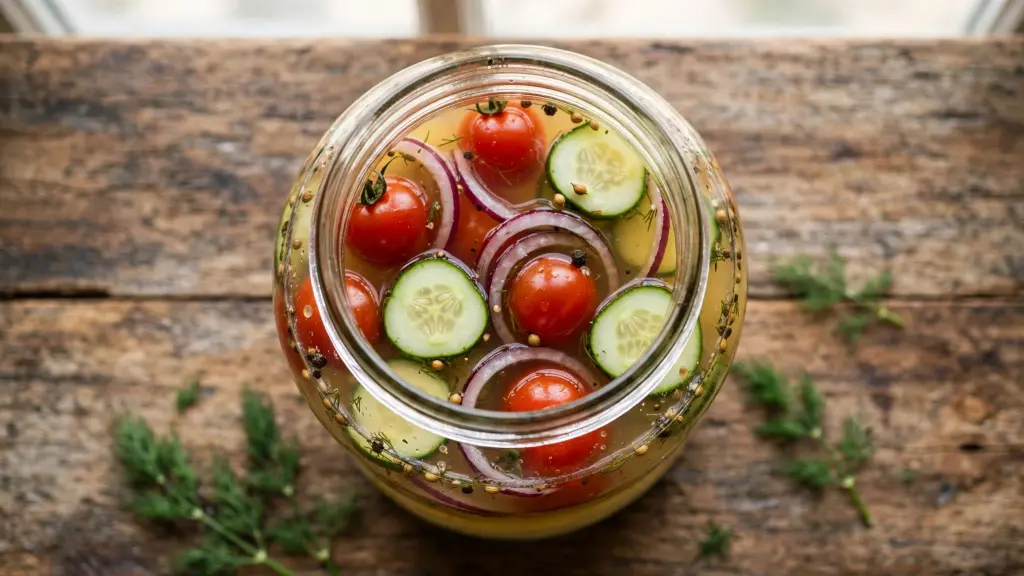
Quick Pickled Cherry Tomatoes, Onion & Cucumber (Ready in 30 Minutes!)
A Bright, Crunchy Side You’ll Make on Repeat
If you want a quick answer: combine sliced cherry tomatoes, cucumber, and red onion with a warm vinegar brine, let them sit for at least 30 minutes, and you’ve got a tangy, crisp condiment ready to eat. No canning, no special equipment, just a jar and a little patience.
I started making this the summer my garden cherry tomatoes came in faster than I could eat them. I needed something that used them up without turning on the oven, and this quick pickle became my go-to. It’s the kind of recipe you throw together while dinner’s cooking, then forget about until you need something bright to cut through a rich meal.
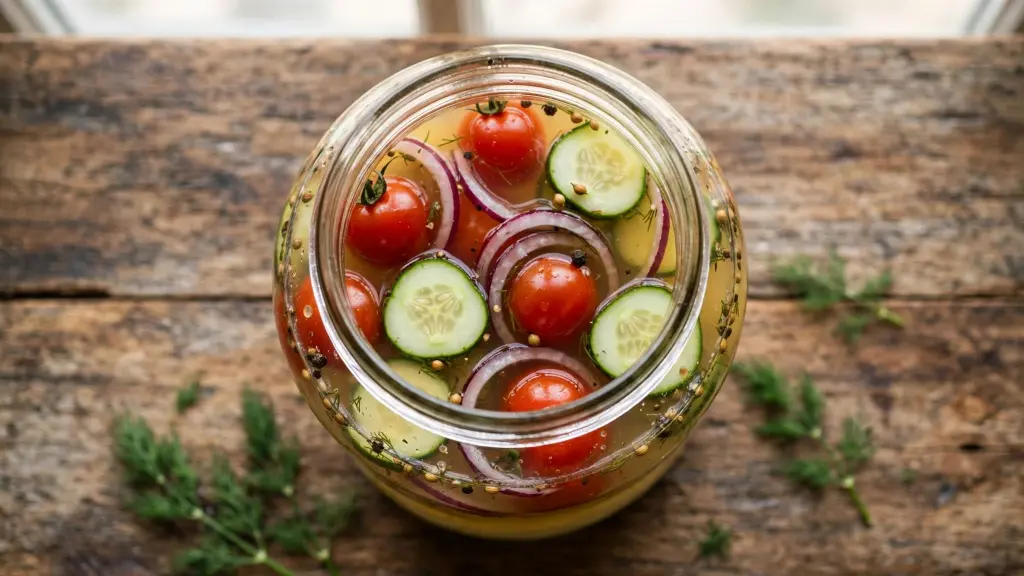
Recipe Snapshot
- Prep Time: 15 minutes
- Cook Time: 5 minutes (for the brine)
- Total Time: 30 minutes (plus optional extra chill time)
- Servings: 4-6 as a side
- Difficulty: Easy
Why You’ll Love This Recipe
- Ready in under an hour, with no canning skills or equipment needed
- Uses simple pantry staples you probably already have
- Adds a punch of tangy, crunchy contrast to grilled meats, sandwiches, and salads
- Naturally low-calorie and endlessly customizable with herbs and spices
- Keeps well in the fridge, so you always have a bright bite on hand
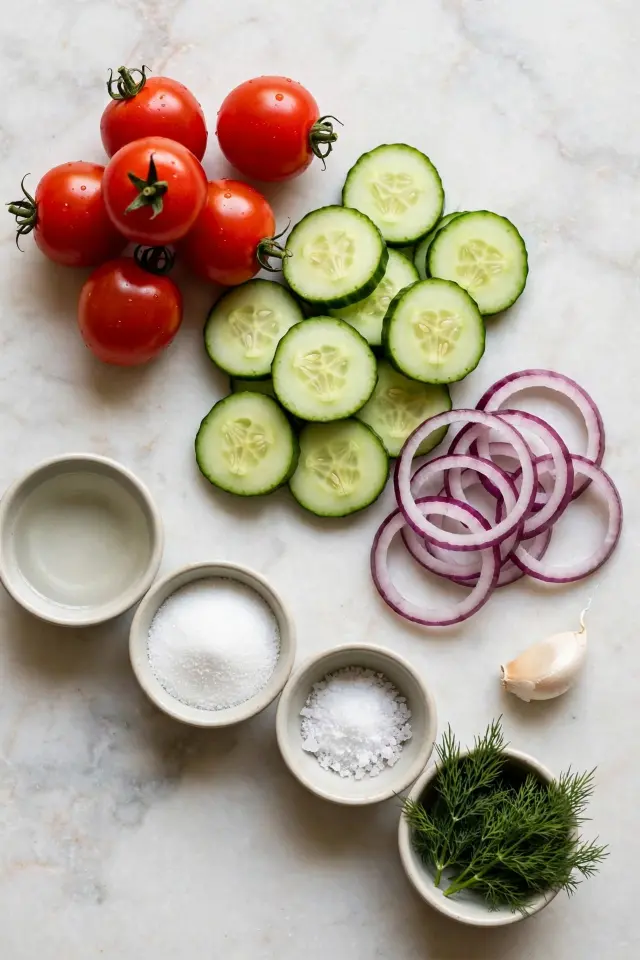
For the Brine
- 3/4 cup white vinegar or apple cider vinegar
- 1/4 cup water
- 2 tablespoons granulated sugar (honey works as a substitute)
- 1 1/2 teaspoons kosher salt
- 1/2 teaspoon black peppercorns
- 1/2 teaspoon mustard seeds (optional, but adds nice texture and flavor)
- A few sprigs of fresh dill, or 1/2 teaspoon dried dill
Substitution notes: No apple cider vinegar? Plain white vinegar gives a sharper, cleaner tang. Want it milder? Swap in rice vinegar and cut the sugar slightly. If you’re avoiding sugar, a small amount of honey or a sugar substitute works, though the pickle will taste slightly different.
How to Make Pickled Cherry Tomatoes, Onion & Cucumber
- Slice your vegetables. Halve the cherry tomatoes, thinly slice the cucumber into rounds, and slice the red onion into thin half-moons. Try to keep the pieces roughly the same thickness so everything pickles evenly.
- Layer the vegetables in a jar. Pack the tomatoes, cucumber, and onion into a clean glass jar or heatproof bowl. If you’re using garlic, tuck the smashed clove in among the vegetables now.
- Make the brine. In a small saucepan, combine the vinegar, water, sugar, salt, peppercorns, and mustard seeds. Bring it to a gentle simmer over medium heat, stirring until the sugar and salt fully dissolve — this usually takes about 2-3 minutes.
- Is it necessary to heat the brine? Not strictly, but warming it helps the sugar and salt dissolve faster and lets the vegetables soften slightly quicker, so you get flavorful pickles sooner rather than waiting hours.
- Pour the hot brine over the vegetables. Carefully pour the warm brine directly over the tomatoes, cucumber, and onion, making sure everything is fully submerged. If needed, press the vegetables down gently with a spoon.
- Add the dill. Tuck fresh dill sprigs into the jar, or stir in dried dill if that’s what you have on hand.
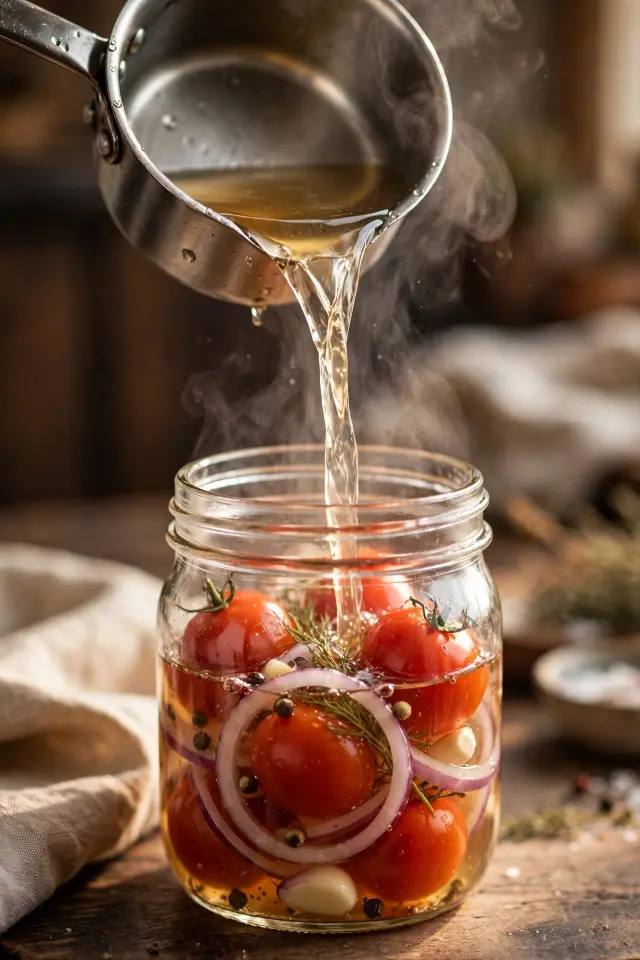
- Let it cool, then chill. Allow the jar to cool to room temperature on the counter, about 15-20 minutes, then cover and refrigerate.
- Wait at least 30 minutes before eating. The pickles are ready to enjoy after 30 minutes, but the flavor deepens significantly after 2-3 hours, and it’s even better the next day.
Expert Tips for the Best Pickled Vegetables
- Don’t skip drying your vegetables. Pat the cucumber slices dry before adding them to the jar — excess water dilutes the brine and can make the pickle taste flat.
- Use a jar with a tight-fitting lid. This keeps the brine sealed in and prevents fridge odors from creeping into your pickles.
- Storage: These will keep well in the refrigerator for up to 2 weeks in a sealed jar. The vegetables will continue to soften slightly the longer they sit, so eat the cucumber first if you like extra crunch.
- Common mistake: Adding the vegetables to a boiling-hot brine straight off the stove can partially cook the cucumbers, leaving them limp instead of crisp. Let the brine come down to a simmer rather than a rolling boil before pouring.
- Flavor variations that actually work: Add a pinch of red pepper flakes for heat, or swap dill for fresh basil if you’re serving this alongside Italian-style Strawberry Earthquake Cake. A few coriander seeds in the brine also pair beautifully with grilled dishes.
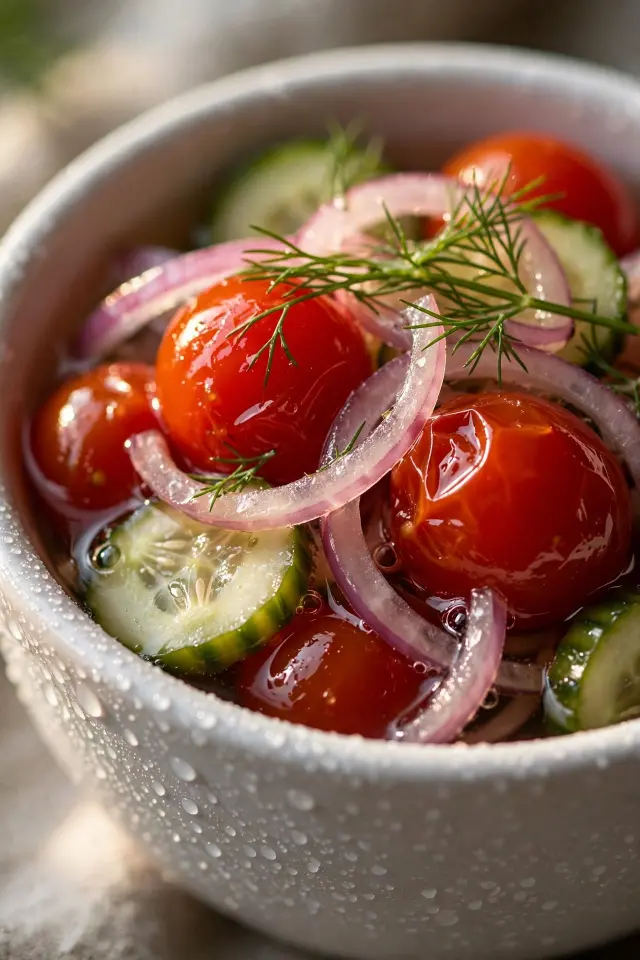
This little pickle has become one of my favorite ways to round out Gipfeli Recipe especially in summer when tomatoes and cucumbers are at their peak. Pickling vegetables at home is also a simple way to preserve a garden surplus without any special canning gear — a technique that home cooks have relied on for generations to extend the life of fresh produce. If you’re new to pickling, this is a forgiving place to start, since there’s no pressure canning or sterilizing involved, just a quick brine and a little patience.
Pair it with Grilled Peaches with Honey Yogurt for a bright, acidic contrast, or spoon it over Himalayan Salt and Lemon Water for extra crunch. It also makes a great topping for sandwiches when you want something tangier than plain lettuce and tomato.
Frequently Asked Questions
How long do pickled cherry tomatoes, onion, and cucumber last in the fridge?
Stored in a sealed jar in the refrigerator, this quick pickle stays good for up to 2 weeks. The texture is best within the first week, especially for the cucumber.
Can I make this without sugar?
Yes, you can reduce or omit the sugar, though it does help balance the vinegar’s sharpness. A touch of honey or a sugar substitute works if you want to cut back without losing that sweet-tangy balance.
Do I need to can this to make it shelf-stable?
No, this is a quick refrigerator pickle, not a shelf-stable canned pickle. It must be kept refrigerated and eaten within a couple of weeks, since it hasn’t been processed for long-term shelf storage.
Why are my pickled vegetables mushy instead of crisp?
This usually happens when the brine is added while boiling hot, or when the vegetables sit in the brine for too many days. Let the brine cool slightly before pouring, and eat the cucumbers within the first week for the best crunch.
Can I reuse the leftover brine?
You can reuse the brine once for a fresh batch of vegetables, though the flavor will be slightly milder the second time around. For the best results, make a fresh brine if you want a strong, punchy pickle.
Give It a Try
This pickled cherry tomatoes, onion, and cucumber recipe is one of those small kitchen wins that makes everything else on your plate taste a little brighter. Once you’ve got a jar in the fridge, you’ll find yourself reaching for it constantly — on sandwiches, next to grilled dinners, or just eaten straight out of the jar with a fork. If you make it, I’d love to hear how it turned out — snap a photo, save this recipe to your favorite Pinterest board, and share it with a friend who loves a good pickle as much as you do.


2 Comments