

The Only Gipfeli Recipe You’ll Ever Need (Swiss Bakery-Style, No Special Equipment)
Making a proper gipfeli recipe at home comes down to three things: cold butter, patient folding, and letting the dough rest when it wants to rest — do that, and you’ll get flaky, golden crescents that rival anything from a Swiss bakery counter.
I started making gipfeli after a trip to Zurich left me obsessed with the little bakery down the street from where I was staying. Every morning I’d buy one still warm, and every morning I told myself I’d figure out how to recreate it once I got home. It took a few doughy failures (one batch came out more like dense rolls than crescents) before I landed on the method below. Now it’s my go-to for slow Sunday mornings and it’s become one of the most requested Himalayan Salt and Lemon Water

Recipe Snapshot
- Prep Time: 40 minutes (plus 3 hours resting/chilling)
- Cook Time: 18 minutes
- Total Time: About 4 hours
- Servings: 12 gipfeli
- Difficulty: Intermediate
Why You’ll Love This Recipe
- Buttery, flaky layers without needing professional laminating equipment
- Simple pantry ingredients — no exotic flours or fancy tools
- Freezer-friendly, so you can bake a fresh batch anytime
- Genuinely tastes like the ones from a Swiss bakery, not an imitation
- Great for beginners easing into laminated dough
For the Butter Block:
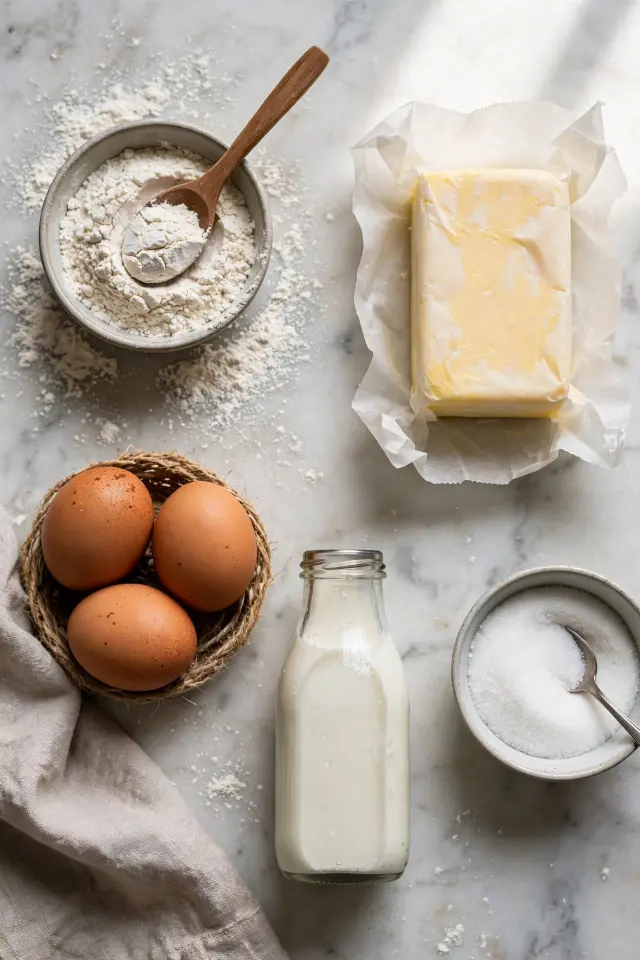
- 250g (about 2 sticks plus 1 tbsp) cold unsalted butter, high-fat European-style if you can find it
For the Egg Wash:
- 1 egg, beaten with 1 tbsp milk
Substitution note: If you don’t have European-style butter, standard unsalted butter works fine — just keep it very cold, since higher water content can make lamination trickier. Wondering if you can make this dairy-free? You can swap the milk for oat milk, but the butter block really does need real butter for proper flaky layers.
- Egg wash. Brush each gipfeli gently with the egg-milk wash — this is what gives them that deep golden shine.
- Bake. Bake at 200°C (400°F) for 16-18 minutes, until deeply golden and the layers are visibly separating along the sides.
- Cool briefly. Let them rest on the tray for 5 minutes before moving to a rack — they’re fragile and flaky straight from the oven.
Expert Tips for Perfect Gipfeli
- Keep everything cold. The single biggest mistake is letting the dough or butter warm up mid-process. If it feels soft or greasy at any point, stop and chill it again before continuing.
- Don’t skip the rests. Rushing the chilling steps is tempting, but the gluten needs time to relax, or your dough will fight back and shrink when rolled.
- Freeze for later. Shaped, unbaked gipfeli freeze beautifully. Freeze them on a tray until solid, then transfer to a bag — bake straight from frozen, adding a few extra minutes.
- Reheat gently. Leftover baked gipfeli reheat best in a 150°C (300°F) oven for about 5 minutes; the microwave will make them chewy instead of crisp.
- Watch your proofing environment. If your kitchen is cold, proofing can take much longer than an hour — look for visible puffiness rather than watching the clock. For more on how yeast fermentation actually works, the King Arthur Baking guide to yeast is a solid technical reference.
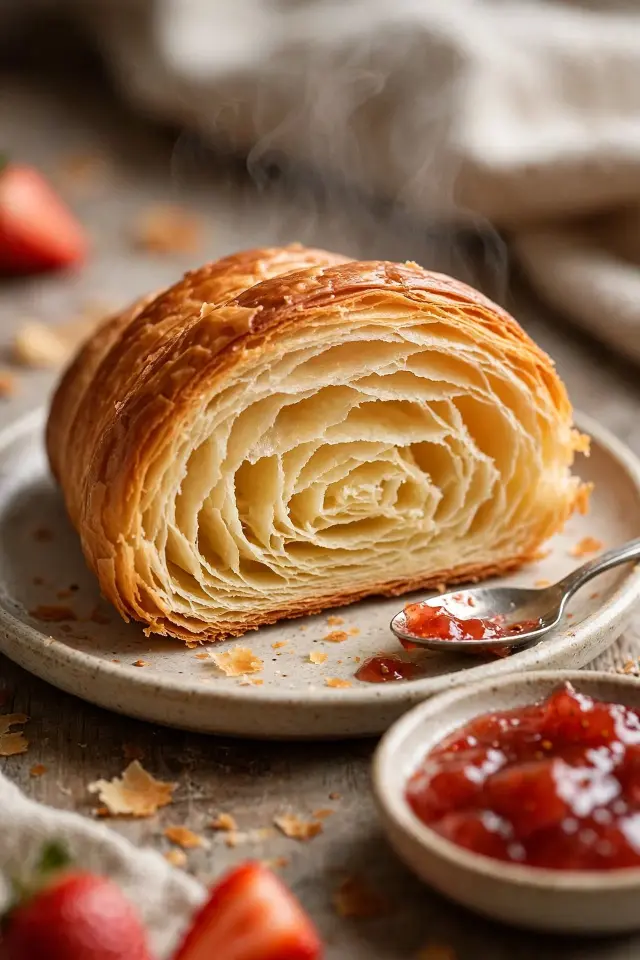
This method borrows the same lamination logic used in classic croissant-making — if you want to go deeper on the science of butter layers and gluten structure, Serious Eats’ guide to laminated dough breaks it down well. Once you’re comfortable with this technique, it opens the door to other laminated pastries, and pairs nicely with a wider rotation of Baked Chicken Breast Recipeon busy mornings.
Frequently Asked Questions
What’s the difference between gipfeli and croissants?
Gipfeli are the Swiss cousin of the French croissant — typically slightly less buttery, a bit denser, and often shaped a little straighter rather than deeply curved. They’re a breakfast staple across Switzerland, similar to how croissants function in France.
Can I make gipfeli dough ahead of time?
Yes — after the final lamination turn, you can refrigerate the dough overnight instead of proceeding immediately. Just bring it slightly toward room temperature before rolling so it’s not too stiff to work with.
Why did my gipfeli turn out dense instead of flaky?
This almost always comes down to either skipping a fold, letting the butter melt into the dough during rolling, or under-proofing before baking. Cold, patient technique is really the whole secret here.
Can I freeze baked gipfeli instead of unbaked ones?
You can, though texture is better if you freeze them unbaked and bake fresh. If you do freeze baked ones, reheat in the oven rather than the microwave to bring back some crispness.
Do I need a stand mixer for this gipfeli recipe?
No — this dough comes together easily by hand since it doesn’t need extensive kneading. A bench scraper and a rolling pin are really the only tools you need.
Gipfeli Recipe
Buttery, flaky Swiss-style crescents made from scratch — no stand mixer, just cold butter and patience.
Ingredients
For the Dough
- 500g all-purpose flour
- 10g fine sea salt
- 60g granulated sugar
- 10g instant yeast
- 280ml whole milk, lukewarm
- 1 large egg
- 40g unsalted butter, softened
For the Butter Block
- 250g cold unsalted butter
For the Egg Wash
- 1 egg, beaten with 1 tbsp milk
Instructions
- 1. Mix flour, salt, sugar, and yeast, then add milk, egg, and softened butter to form a shaggy dough.
- 2. Knead briefly, about 5 minutes, just until smooth.
- 3. Shape the dough into a rectangle, wrap, and chill for at least 1 hour.
- 4. Pound the cold butter into a flat block between sheets of parchment paper.
- 5. Encase the butter block in the rolled-out dough, sealing the edges completely.
- 6. Roll the dough into a rectangle and fold it into thirds. Chill for 30 minutes.
- 7. Repeat the roll-and-fold process two more times, chilling for 30 minutes between each turn.
- 8. Wrap and chill the finished dough for at least 1 hour, or overnight.
- 9. Roll the dough to about 4mm thick and cut it into long triangles.
- 10. Roll each triangle from the wide base toward the point, then gently curve the ends into a crescent shape.
- 11. Proof at room temperature for 1 to 1.5 hours, or until visibly puffy.
- 12. Brush each gipfeli gently with the egg wash.
- 13. Bake at 200°C (400°F) for 16 to 18 minutes, until deeply golden and flaky.
- 14. Let the gipfeli rest on the baking tray for 5 minutes before transferring them to a cooling rack.
If you make this gipfeli recipe, I’d love to hear how it turns out. Snap a photo, tag it, or pin it for your next slow weekend morning. There’s something genuinely satisfying about pulling a tray of golden, flaky crescents out of your own oven, and the process gets easier every time you make it.
Save this recipe for later, and check out more of our Chickpea Salad Sandwiches and Zucchini Zoodle Pasta while you’re here.
Give These a Try
If you make this gipfeli recipe, I’d love to hear how it turns out — snap a photo, tag it, or pin it for your next slow weekend morning. There’s something genuinely satisfying about pulling a tray of golden, flaky crescents out of your own oven, and I promise the process gets easier every time you make it. Save this one for later, and check out more of our Chickpea Salad Sandwiches and Zucchini Zoodle Pasta while you’re here.

One Comment