
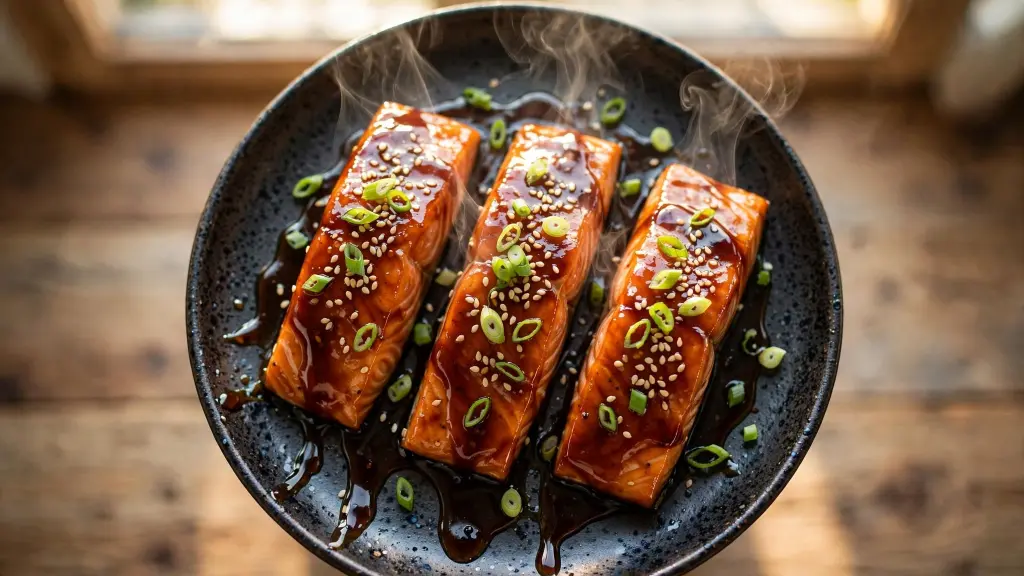
Teriyaki Salmon Recipe (Ready in 20 Minutes, No Marinating Required)
A Weeknight Salmon Dinner That Actually Delivers
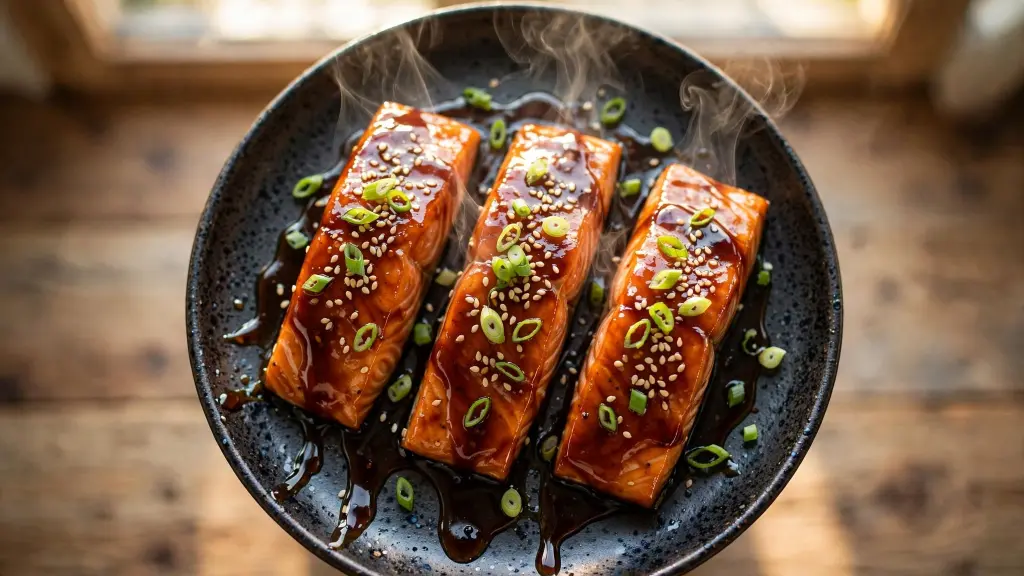
If you want tender, flaky salmon coated in a glossy, sweet-savory glaze without marinating for hours, this teriyaki salmon recipe gets you there in about 20 minutes using pantry staples you probably already have. I started making this on Tuesday nights a few years back when I needed something that felt special but couldn’t eat into my evening, and it’s stuck around ever since — mostly because the sauce reduces right in the pan while the salmon cooks, so there’s no separate marinating step slowing things down. The first time my husband tasted the glaze, he asked if I’d ordered takeout. That’s the reaction I’m hoping this recipe gives you too.
Recipe Snapshot
- Prep Time: 5 minutes
- Cook Time: 15 minutes
- Total Time: 20 minutes
- Servings: 4
- Difficulty: Easy
Why You’ll Love This Recipe
- Ready in 20 minutes flat, making it one of the more reliable easy dinner recipes for busy weeknights
- No marinating required — the sauce builds flavor as it cooks
- Made with simple pantry ingredients, no specialty grocery run needed
- The glaze thickens naturally into a sticky, restaurant-quality finish
- Endlessly adaptable for Lemon Basil Pasta Salad more salmon recipes] or swapped into your rotation of Cherry Cobbler Recipe
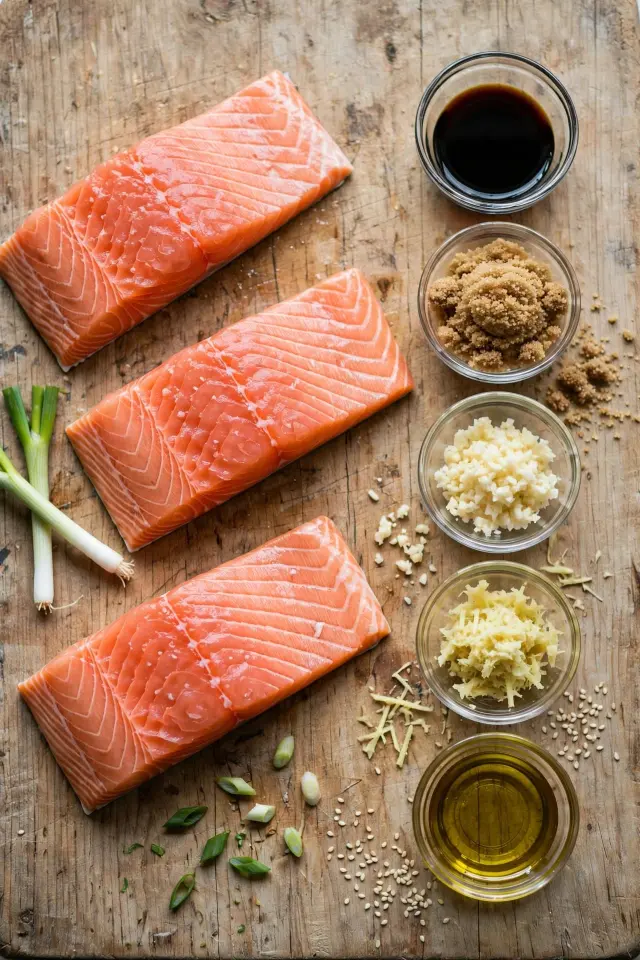
For Garnish
- Sliced scallions
- Toasted sesame seeds
Can you use frozen salmon for this teriyaki salmon recipe?
Yes, just thaw it fully in the fridge overnight or under cold running water first — cooking it from frozen will steam the fish instead of searing it, and you’ll miss out on that caramelized glaze finish.
Why does the sauce need cornstarch instead of just reducing longer?
Reducing alone would work eventually, but it risks over-browning the sugar into bitterness. A cornstarch slurry thickens the glaze quickly at a lower temperature, so you keep the balance of sweet and savory instead of tipping into burnt caramel territory — a principle borrowed from classic Peach Cobbler Recipes
Expert Tips
- Don’t overcook the salmon. Pull it from the heat when the center is just slightly translucent — it’ll finish cooking in the residual heat and glaze, staying moist instead of dry and chalky.
- Pat the fish bone-dry before searing. Any surface moisture creates steam, which prevents that golden crust from forming.
- Storage: Leftovers keep in an airtight container in the fridge for up to 3 days.
- Reheating: Warm gently in a covered skillet over low heat with a splash of water to loosen the glaze — microwaving tends to dry the fish out and make it rubbery.
- Sauce too thin or too thick? Add a touch more slurry to thicken, or a splash of water to loosen it back up; it firms up more as it cools, so slightly thinner than you want is usually right.
Frequently Asked Questions
What should I serve with teriyaki salmon?
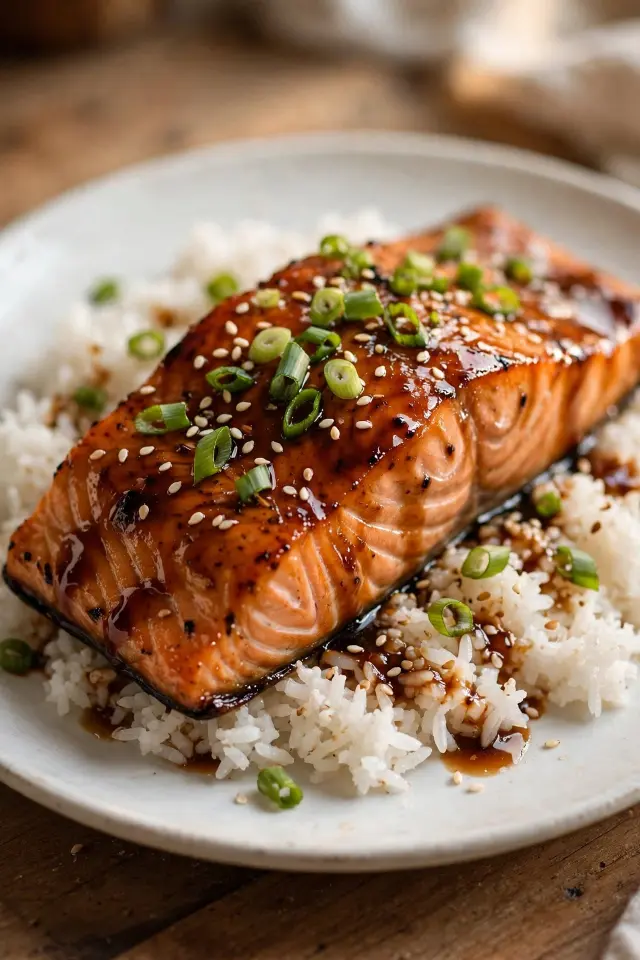
Steamed white or brown rice is the classic pairing since it soaks up the extra glaze, but it’s just as good over noodles or alongside quick-sautéed vegetables like broccoli or snap peas.
Can I make teriyaki salmon in the oven instead of on the stovetop?
Yes — bake at 400°F for about 12-15 minutes, then broil for 1-2 minutes after brushing with the reduced sauce to get a caramelized top, though you won’t get quite the same seared crust as the skillet method.
Is teriyaki salmon healthy?
Salmon is a well-known source of omega-3 fatty acids, and this version keeps things reasonably light since the glaze is portion-controlled rather than a deep marinade — you can find more on the nutritional profile of salmon from a source like Healthline.
Can I use bottled teriyaki sauce instead of making my own?
You can, but homemade lets you control the sugar and sodium, and it takes barely more effort than opening a bottle — the technique of reducing it in the pan with the pan drippings is what really elevates it.
Why is my glaze not thickening?
Make sure your slurry is fully dissolved (no cornstarch clumps) and that the sauce is actually simmering, not just warm, when you add it — cornstarch needs heat to activate. For more on how thickening agents work, The Kitchn has a solid breakdown of common techniques.
Give This One a Try
This teriyaki salmon recipe has earned a permanent spot in my weeknight lineup, and I think it’ll do the same for yours — it’s fast, forgiving, and makes salmon feel like an occasion instead of an obligation. If you make it, I’d love to hear how it turned out in the comments, and if you’re building out your own collection of healthy dinner ideas, Blue Salt Trick Recipe go ahead and pin this one for later so it’s easy to find next time hunger strikes on a busy night.





6 Comments